Yes. Concrete gets poured all winter long in Indiana, and when it is done right, it ends up just as strong as concrete poured in June. The honest follow-up is that “done right” carries more weight in January than it does in May. Winter pouring is a controlled process with real rules, real added costs, and one risk that cannot be undone if it goes wrong.
This guide covers what actually happens when fresh concrete gets cold, the temperature limits that matter, how crews protect a winter pour in Allen County conditions, what it costs, and how to decide whether your project should go ahead now or wait for the ground to warm up.
If you are earlier in your planning and comparing seasons, start with our guide to the best time of year to pour concrete in Indiana. This article picks up where its winter section leaves off.
What Freezing Actually Does to Fresh Concrete
Concrete does not dry. It cures. The cement and water in the mix react and slowly lock together, and that reaction is what gives the slab its strength. In plain terms, the mix is gluing itself together over its first several days, and the glue needs two things to work: moisture and warmth.
Cold slows the reaction. That alone is not damage. It just means everything takes longer.
Freezing is different. If the temperature inside the slab drops below about 25 degrees during the first day or two, the water in the mix turns to ice. Ice takes up more room than water. It expands inside concrete that has almost no strength yet, and it breaks the structure apart from the inside before the glue has set.
Concrete that freezes on its first night can lose half its strength permanently. It will still get hard. It will look normal. And it will start crumbling at the surface within a winter or two, because the damage was locked in during the first 24 hours. There is no additive, sealer, or repair that puts that strength back.
That one fact drives every rule in this article. The entire discipline of winter concreting exists to keep fresh concrete from freezing during its most fragile window.
How Cold Is Too Cold to Pour Concrete?
According to The American Concrete Institute, the industry line is drawn at 40 degrees. ACI 306, the standard for cold weather concreting, applies once the average daily temperature falls below 40 degrees Fahrenheit for three days in a row. From that point, the concrete has to be kept above 50 degrees through its protection period, usually three days for flatwork and up to seven for structural pours.
In plain terms, 40 degrees is not the temperature where pouring stops. It is the temperature where the extra rules start.
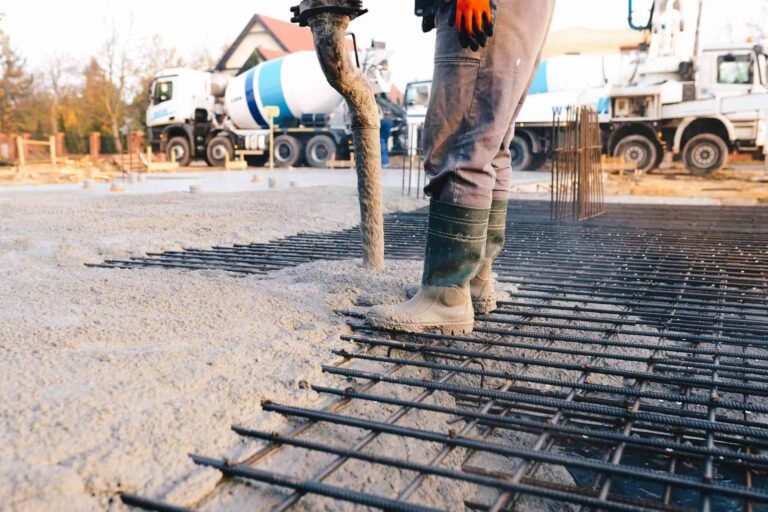
Here is the part most homeowners find surprising: with those rules followed, there is almost no air temperature that makes a pour impossible. Crews in northeast Indiana pour through 20-degree weeks using heated water, warmed aggregate, ground thawing, and insulated covers. The concrete never knows it is winter, because the whole process is built to keep it from finding out.
What actually stops a winter pour is not the air. It is one of three things.
The ground is frozen and cannot be thawed practically. Concrete placed on frozen subgrade, the packed dirt and stone under the slab, will settle and crack when that ground thaws in spring.
The slab cannot be kept warm through the protection period. A pour you cannot protect for three days is a pour that should not happen.
The economics stop making sense. Every layer of protection costs money, and at some point waiting for March is simply the better deal.
Fort Wayne Winters by the Numbers
Northeast Indiana winters are cold enough to demand full protection but rarely cold enough to force a hard stop. Fort Wayne’s average January high is 33 degrees with an average low of 19. December and February sit a few degrees on either side. Frost in this region commonly reaches 30 to 40 inches into the ground by late winter, which matters for foundations and footings more than for surface slabs.
What that means in practice: November pours are routine with blankets, December and January pours are done regularly but priced accordingly, and February is often the hardest month, not because of the air, but because the ground has had all winter to freeze deep.
Freeze-thaw cycling is the other local reality. The Fort Wayne area swings through roughly 90 to 100 freeze-thaw cycles per year. That is why every outdoor pour here, winter or summer, needs air entrainment: tiny air bubbles mixed through the concrete, usually 5 to 7 percent. In plain terms, those bubbles give ice somewhere to go when it expands, so the hardened slab does not push itself apart over years of Indiana winters. Ask any contractor bidding your project whether the mix is air-entrained. It matters even more on a winter pour.
How Crews Protect a Winter Pour
A proper cold weather pour in Allen County runs on four layers of protection. Each one exists to solve a specific problem.
Thawed ground
Ground heaters or insulated tarps go down before pour day to bring the subgrade above freezing. Skipping this step is the most common cause of winter slab failure, because the damage shows up months later as settling and cracking, long after the crew is gone.
A warmed or adjusted mix
Batch plants heat the mix water in winter. Crews may also add more cement, switch to a faster-setting cement, or stir in an additive that speeds setting so the concrete gains strength before the cold can reach it. Calcium chloride is the traditional accelerator and still works on plain slabs, but it rusts steel, so it stays out of reinforced work.
Covering, immediately and completely
Insulated concrete blankets go on as soon as finishing is done and stay on through the whole protection period. The edges get extra attention, because slab edges lose heat fastest. For foundations and larger structural pours, crews build temporary heated enclosures instead. If your project involves concrete foundations, expect an enclosure, not just blankets.
Patience in the finishing
Cold concrete sets slowly, and water is slower to rise to the top (contractors call this bleed water). Finishing too early seals that water under the surface, where it comes back as blisters and peeling. A good winter finisher waits longer than feels comfortable. That patience is a skill you are paying for.
One warning sign worth knowing: if a contractor quotes a January pour without mentioning ground thawing, blankets, or how long the slab will stay covered, the protection is probably not in the plan. The concrete will still arrive. It just will not survive its first winters well.
What Winter Pouring Costs
Expect a winter pour to run 10 to 20 percent above the same project priced for spring or fall. The premium is not padding. It buys specific things: fuel and equipment for ground thawing, heated mix water or additives, blanket rental or enclosure construction, and additional crew hours, because nothing about a cold pour can be rushed.
Season also cuts the other way. Winter is the slow season for concrete work, so scheduling is easier and some contractors sharpen their pricing to keep crews busy. The result is that a winter pour is sometimes closer in total cost to a peak-season pour than the protection premium alone would suggest. For a full picture of what drives project pricing in this market, see our guide to concrete pricing in Fort Wayne, Indiana.
The quote to be suspicious of is the winter price that matches a summer price. Protection costs money. If the number does not reflect that, the protection is usually what got cut.

Should You Pour Now or Wait for Spring?
The honest answer depends on what the project is and why now.
Pour now if the project is urgent or structural. A failed garage slab, a foundation holding up a construction schedule, a safety problem at a commercial entrance. These have real costs attached to waiting, and a properly protected winter pour solves them at full quality.
Pour now if interior work is possible. Garage floors, basement slabs, and other interior pours can be enclosed and heated. Winter is genuinely fine for this work, and scheduling is usually easy.
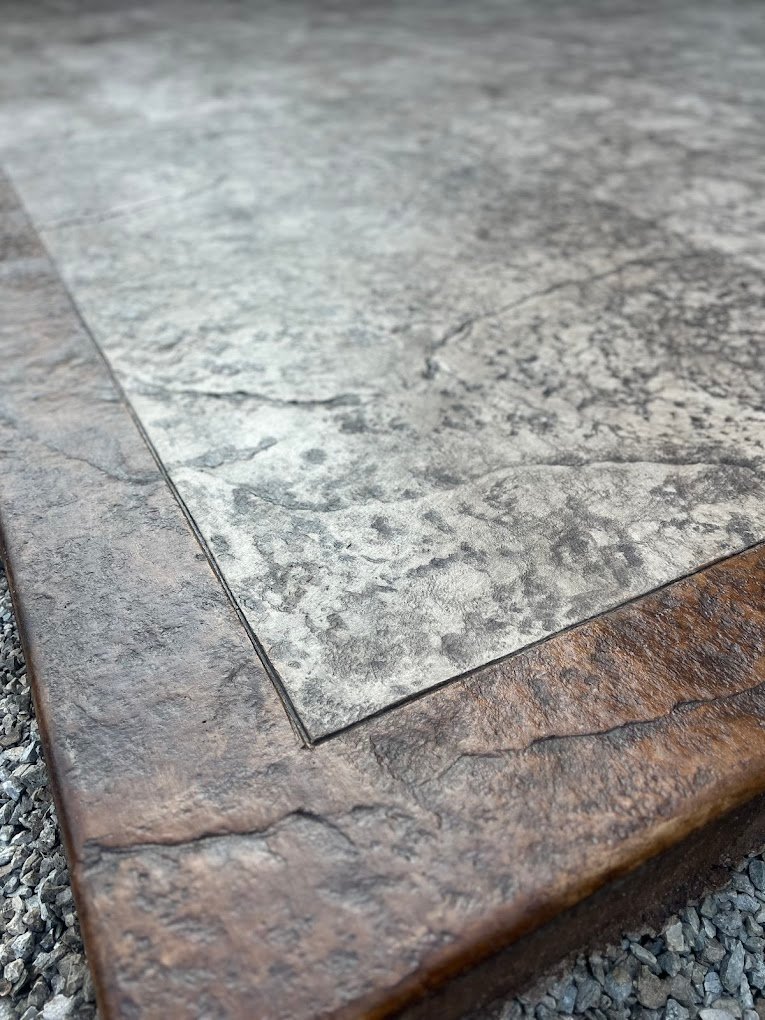
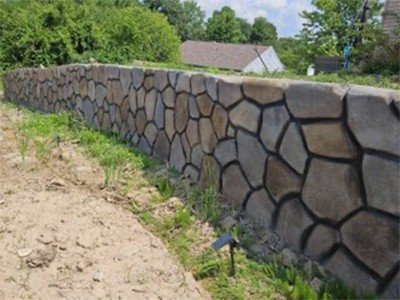
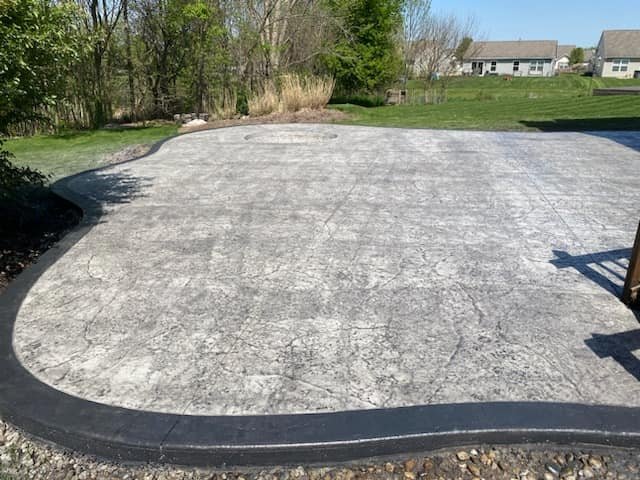
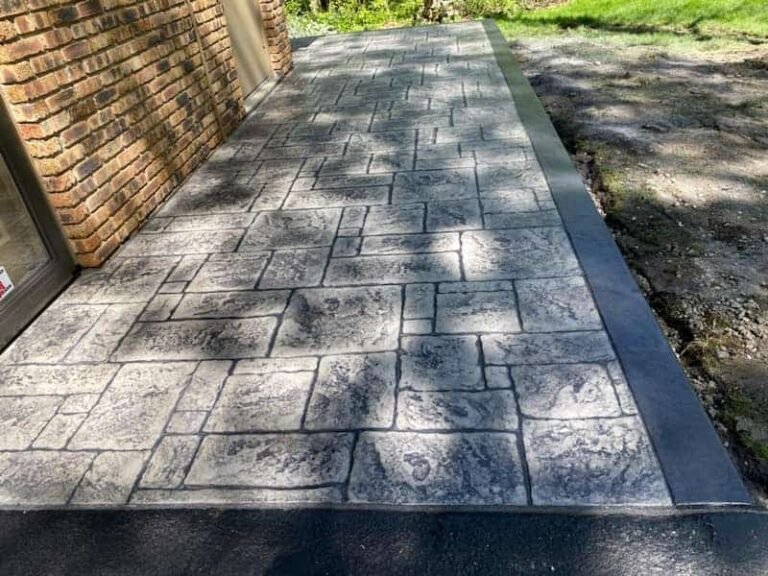
Wait if the project is decorative. Stamped concrete needs the slab in a narrow, just-right state to take the pattern, and cold never quite allows it. Decorative work belongs in the May through October window.
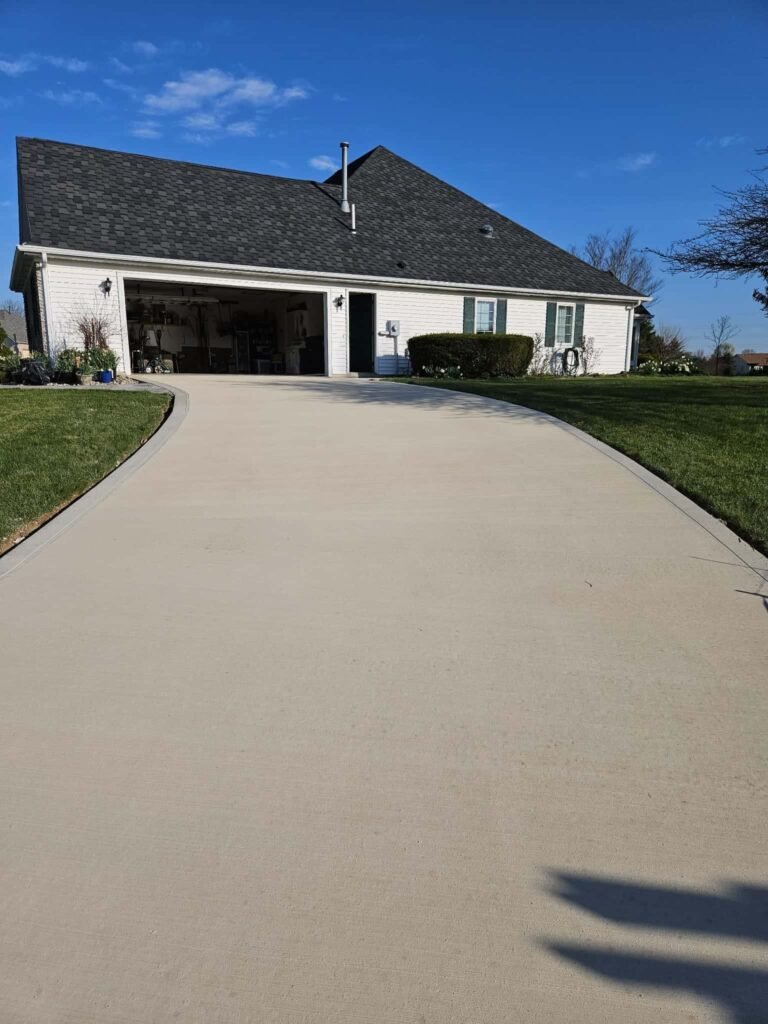
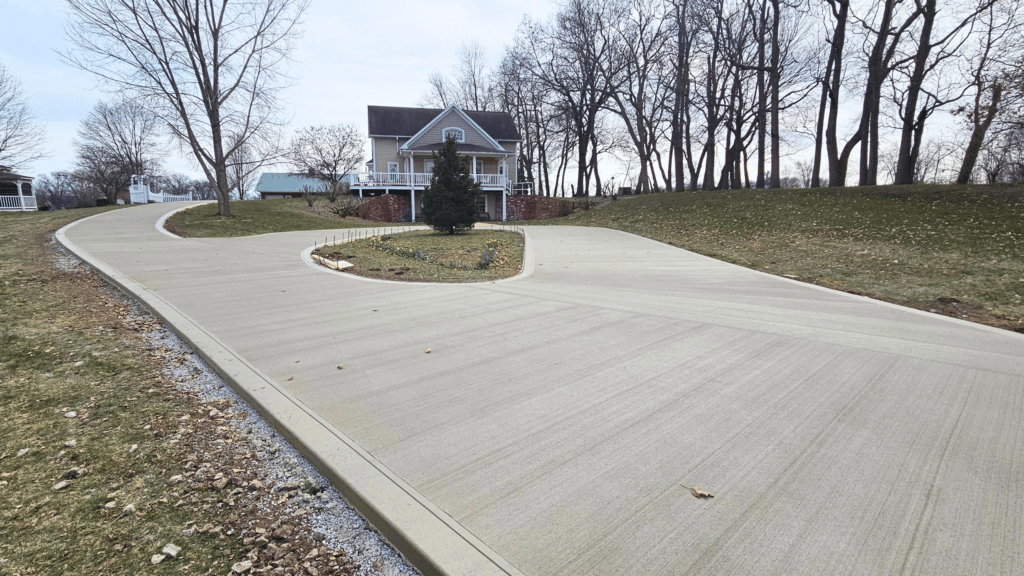
Wait if the driveway still works. A cracked but functional driveway gains nothing from a January replacement. A concrete driveway replacement in Fort Wayne poured in May gets the same lifespan with a wider safety margin and a lower price. Book it in late winter, though. Spring slots fill fast.
Wait if the repair is small. Most patching and concrete repair products need the surface above 50 degrees and rising to bond properly. A crack patched in December has a good chance of letting go by March. Repairs are spring work.
Common Cold Weather Concrete Mistakes
Trusting the daytime high. A 45-degree afternoon followed by an 18-degree night is a freezing risk, period. The overnight low decides whether protection is needed.
Pouring on frozen ground because the air feels mild. The subgrade does not thaw on the same schedule as the air. Early winter mild spells are the classic trap.
Pulling blankets off early. The slab needs its full protection period, three days minimum, even if the surface looks hard on day one. Hard is not the same as strong.
Using unheated water in bagged mixes. Small DIY jobs fail this way constantly. Warm water is the single easiest cold weather adjustment there is.
Sealing a winter pour before spring. A slab poured in December will not be ready for sealer until the weather warms and the concrete fully cures. Sealing too early traps moisture and clouds or peels. An air-entrained slab will get through its first winter unsealed just fine.
Frequently Asked Questions
How cold is too cold to pour concrete?
The working limit is an average daily temperature of 40 degrees Fahrenheit. Below that, cold weather rules apply and the fresh concrete must be kept above 50 degrees for its first three to seven days. Without protection, pouring below 40 degrees risks weak concrete, and pouring when the slab could freeze in its first 24 hours risks permanent damage. With heaters, blankets, and a warmed mix, crews pour safely well below freezing. The air temperature matters less than whether the concrete itself can be kept warm.
Why shouldn't you pour concrete in winter?
The main reasons to wait are cost and margin for error. Winter pours need thawed ground, heated or adjusted mix, insulated covering, and longer finishing times, which typically adds 10 to 20 percent to the price. Every protection step that gets skipped becomes a permanent defect: concrete that freezes early can lose half its strength and never recover it. If the project is not urgent, waiting for spring buys a wider safety margin at a lower price. If the project cannot wait, winter pouring done properly produces concrete just as strong as a summer pour.
Can I cement in cold weather?
Yes, with preparation. Small cement and concrete jobs in cold weather follow the same rules as big ones: the ground must not be frozen, the mix should be made with warm water, and the finished work must be covered and kept above 50 degrees for at least three days. Bagged concrete products often list a minimum application temperature on the label, commonly 40 degrees and rising. For patching and repair products the window is usually narrower than for fresh concrete, so check the label before starting a winter repair.
Can concrete freeze after 3 days?
After three days of proper curing above 50 degrees, concrete has usually gained enough strength to survive a freeze without serious damage. The dangerous window is the first 24 to 48 hours, when the water in the mix can turn to ice and break the concrete apart from the inside before it has strength to resist. That is why cold weather practice keeps the slab warm for a minimum of three days, and up to seven for structural work. A hard freeze on day three of a protected pour is an inconvenience. A freeze on night one is a failure.
Does winter concrete cost more?
Yes. Expect a premium of roughly 10 to 20 percent over a spring or fall pour of the same scope. The added cost covers ground thawing, heated mix water or additives, insulated blankets or a heated enclosure, and extra crew time, since cold concrete sets slowly and cannot be rushed. Be cautious of a winter quote that matches summer pricing. It usually means the protection steps are not in the plan.
How long does concrete take to cure in cold weather?
Longer than usual at every stage. Cold slows the chemical reaction that hardens concrete, so a slab that would take 48 hours to accept foot traffic in May may need three to four days in December. Vehicle traffic should wait at least 10 to 14 days on a winter pour rather than the usual 7. Full design strength still arrives around 28 days if the slab is kept warm through its protection period, but every day below 50 degrees without protection stretches the timeline further.
Winter Concrete, Done Right the First Time
So, can you pour concrete in winter in Indiana? Yes, and Crystal Creek Concrete does it every year. The real question is whether your project should be poured now or scheduled for warmer ground, and that answer depends on urgency, project type, and budget rather than on the thermometer alone.
Crystal Creek Concrete has been placing concrete across Fort Wayne, Allen County, and northeast Indiana for over 17 years, through every month on the calendar. If your project cannot wait, we will pour it with full cold weather protection and stand behind it. If waiting will get you a better result for less money, we will tell you that too, and get you locked into the spring schedule before it fills.
Call or text us at (260) 241-4936, or request a free estimate online. We will look at your project, your timeline, and this winter’s forecast, and give you a straight answer.