If you are planning a driveway, patio, or slab this year, the single question that changes your outcome more than any other is when you schedule the pour. The best time to pour concrete in Indiana is generally late spring through early fall, with May, September, and early October offering the most forgiving conditions. But that answer is incomplete on its own, because the calendar is only a proxy for what actually matters: air temperature, subgrade condition, humidity, wind, and how much control your contractor has over the curing environment.
Indiana sits in a climate band that punishes shortcuts. Fort Wayne and the surrounding counties see roughly 90 to 100 freeze-thaw cycles per year, along with a spring wet season, a humid summer, and a fall that can drop 30 degrees inside a week. Concrete poured in the wrong window, or poured correctly but protected poorly, does not fail immediately. It fails three winters later, when the surface starts flaking and the control joints spall.
This guide walks through the practical scheduling decisions homeowners actually face: which months are safest, what happens at the temperature margins, how rain and heat affect a fresh slab, and when it makes sense to wait versus when it makes sense to pour with protection in place.
Why Indiana's Climate Makes Timing Matter More Than It Does Elsewhere
A slab that freezes during its first day never gets its strength back. It can lose half of what it should have been, permanently. Warm weather the following week does not fix it.
Here is why. Concrete gets hard through a reaction between cement and water called hydration. In plain terms, the cement and water are slowly gluing themselves together, and that reaction runs on heat. Below about 50 degrees, it slows way down. Below freezing, the water in the fresh mix turns to ice and expands, breaking apart the glue before it has any real strength to lose.
Heat causes the opposite problem, and it is easy to miss. Concrete sets faster when it is hot. That sounds like a good thing. It is not. The crew loses time to float and finish the surface, and water leaves the slab faster than the mix can use it. The slab looks perfect on day one. Within a season it develops fine cracking, dusting, or a soft top layer that wears away.
Then there is the dirt underneath. Much of Allen County sits on Blount and Pewamo silt loam. These are clay-heavy soils. They hold water, and they swell when they freeze. Pour a slab over wet, poorly packed clay in early spring and the concrete is losing a fight with the ground before it has finished curing.
So every recommendation below assumes the base was done right. Timing cannot rescue a bad base.
One more thing your bid should mention: air entrainment. Concrete in a freeze-thaw climate needs tiny air bubbles spread through the mix, usually 5 to 7 percent for outdoor slabs. In plain terms, those bubbles give ice somewhere to go when it expands, so the concrete does not push itself apart from the inside.
This is the single most useful question you can ask a contractor. When you compare quotes on a concrete driveway replacement in Fort Wayne, ask each one whether their mix is air-entrained. If someone cannot answer, cross them off. That one detail separates a driveway that lasts 25 years from one that starts flaking at year six.
The Best Time to Pour Concrete in Indiana: Monthly Breakdown
The table below reflects Fort Wayne climate normals and the practical constraints that come with each month. Ratings assume a competent crew with standard curing practice, not ideal laboratory conditions.

If you want the short version: schedule for May or September. Those two months give you daytime highs in the target 60 to 80 degree range, overnight lows well above freezing, and enough daylight for a crew to place, finish, and begin curing without racing the clock.
September has one additional advantage worth naming. Contractor schedules are typically less compressed than in May, when everyone who spent the winter planning a project calls at once. If you are flexible on timing, a fall pour often means a more experienced crew and a less rushed finishing pass. That matters more than most homeowners realize, since finishing quality determines surface durability far more than the mix design does.
Pouring Concrete in Cold Weather Across Northeast Indiana
Pouring in the cold is not off-limits. It is just a job with more rules.
The rules come from ACI 306, the industry standard for cold weather concreting. It kicks in when the average daily temperature drops below 40 degrees for three days running. From that point, the concrete has to stay above 50 degrees for its protection period, usually three to seven days.
In plain terms, the protection period is the stretch right after the pour when the slab is still fragile and has to be kept warm. Skip it and the concrete never reaches full strength. If a contractor quotes you a November pour without mentioning how they will keep it warm, that is your warning sign.
Here is what that looks like on an actual driveway in Allen or Whitley County.
Thawing the Subgrade (Frozen Ground)
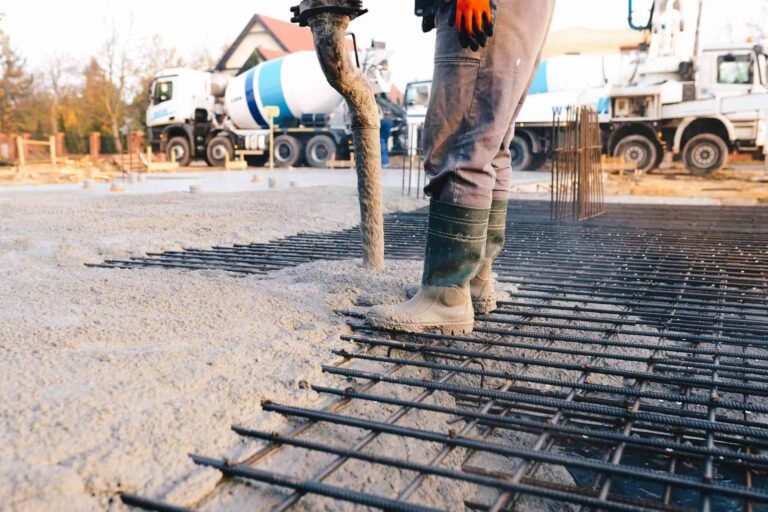
Contractors call this layer the subgrade, meaning the packed dirt and stone your slab sits on. Concrete poured on frozen subgrade will settle later, when that ground thaws underneath it. Crews run ground heaters or lay insulated tarps overnight to warm the base before the truck shows up.
Adjusting the Chemical Concrete Mix
There are four common ways to do it. Heat the mix water. Add more cement. Switch to a faster-setting cement. Or stir in an additive that speeds setting. Calcium chloride is the old standby and still works on plain slabs, but it rusts steel, so it stays out of anything reinforced.
Protecting the Slab with Insulated Blankets
Insulated blankets are the standard tool. Bigger or later pours may get a heated enclosure. Either way the cover stays on for the full protection period, and someone checks the edges, because that is where heat escapes first.
Managing Bleed Water and Finish Timing
Cold concrete sets slowly, and water is slower to rise to the top (contractors call this bleed water). Finish it too early and you seal that water in under the surface. It comes back as blisters, and the top layer peels off. Knowing when to wait is the whole skill.
Cold weather pours typically add 10 to 20 percent to project cost, driven by blankets, heaters, admixtures, and extended labor hours. Whether that premium is worth paying depends on your situation. A homeowner replacing a cracked but functional driveway should wait for spring. A homeowner whose garage slab failed in November, or a builder who needs concrete foundations poured to keep a framing schedule, has a real reason to proceed.
The practical outer limit in northeast Indiana runs to mid or late November for routine residential work. Beyond that, the economics rarely favor the homeowner.
Pouring Concrete in Indiana Summer Heat
Summer’s problem is not the heat. It is the wind.
Water rises to the surface of a fresh slab as it sets. If it evaporates faster than it arrives, the top layer shrinks while the concrete below it stays put. The top tears. You get short, random hairline cracks within hours of the pour (contractors call this plastic shrinkage cracking), before the slab has any strength at all. They look cosmetic at first. Then they become the place water gets in.
Four things drive that evaporation rate: air temperature, concrete temperature, humidity, and wind. ACI 305, the hot weather standard, sets the alarm at 0.2 pounds per square foot per hour.
In plain terms, that is the point where the slab is drying out faster than it can supply itself with water. You hit that number sooner than you would guess. An 82-degree day with a 15 mile per hour breeze and dry air is a harder pour than a still, muggy 90-degree day.
Crews handle summer with four moves. Start the pour at dawn, so finishing happens in the cool hours. Chill the mix water, sometimes with ice. Spray an evaporation retarder between finishing passes. Get curing compound or wet burlap down the moment the last pass is done, not at quitting time.
Humidity is the part nobody expects to help. August in Fort Wayne is hot and sticky, and that stickiness slows evaporation. A humid late-August pour is often easier than a dry, breezy day in early June. Read the forecast, not the calendar.
Rain, Storms, and the Fresh Slab
Rain is the variable homeowners worry about most and understand least. The severity depends almost entirely on timing.

The critical error is not the rain itself. It is a finisher who works standing water back into the surface to make it look right in the moment. Doing so waters down the exact layer that has to survive tire traffic and road salt. That surface will turn powdery, flake, or peel away in sheets. If you are on site during an unexpected shower, the right move is to cover the slab, not to finish through it.
Spring in Indiana brings the highest rainfall variability of the year, which is one reason April sits at “fair” rather than “good” in the month table above. A May pour scheduled around a clear three-day forecast is a materially safer bet than an April pour scheduled around an optimistic one.
Curing Timelines and When You Can Actually Use the Slab
Curing is a maintenance activity, not a waiting period. The concrete needs to stay moist and within a workable temperature range so hydration continues. Under Indiana conditions, the timeline below applies to a standard 4,000 PSI residential mix.

Those grooves cut into your driveway are not decoration. They are control joints, and their job is simple. Concrete is going to crack. The joints decide where.
Cut them one quarter as deep as the slab is thick, and space them about 24 to 30 times the thickness. On a standard four-inch driveway, that means a joint every 8 to 10 feet. Cut them late and the slab cracks wherever it wants instead. That is one of the most common causes of random cracking in work that was otherwise done well, and it is worth checking first when you are weighing concrete repair versus full replacement on an older surface.
Sealing brings the cold weather question back around. Pour in November and your slab may not be ready to seal until spring. It faces its first winter bare. Air-entrained concrete survives that. It is still a good reason to pour earlier if you can.
Planning Your Project Around the Right Window
Scheduling backward from the pour date is the most useful planning exercise a homeowner can do.
6 to 8 Weeks Out: Get Estimates and Book Contractors
Good contractors book the May and September windows early. Waiting until April to call about a May pour usually means taking whatever slot remains.
4 Weeks Out: Confirm Scope and Pull Local Permits
Allen County and the City of Fort Wayne have requirements for driveway approaches connecting to public right-of-way. Confirm who is pulling the permit.
2 Weeks Out: Finalize Subgrade and Base Work
Excavation, grading, and stone base compaction should be complete and settled before concrete is scheduled. On clay-heavy sites, several dry days between base preparation and placement noticeably improve results.
3 Days Out: Check the 72-Hour Weather Forecast
The window that matters is placement day through 72 hours after. Look at overnight lows, not just daytime highs. A 68-degree afternoon followed by a 34-degree night is a cold weather pour regardless of what the daytime number says.
Placement Day: Monitor the Pour and Air-Entrainment
Confirm the slump, ask about air content, and watch how the crew handles the base. You do not need to be an expert to notice whether a job is being run carefully.
Cost varies by season alongside conditions. Summer and fall pricing tends to reflect demand, while winter pricing reflects protection costs. If you want a full breakdown of what drives project pricing in this market, our guide to concrete pricing in Fort Wayne, Indiana covers material, labor, and scope factors in detail, and our breakdown of how much a concrete driveway costs in 2026 goes deeper on driveways specifically.
How Timing Interacts With Different Project Types
Not every concrete project carries the same seasonal sensitivity.
Concrete Driveways & Patios: Maximum Weather Exposure
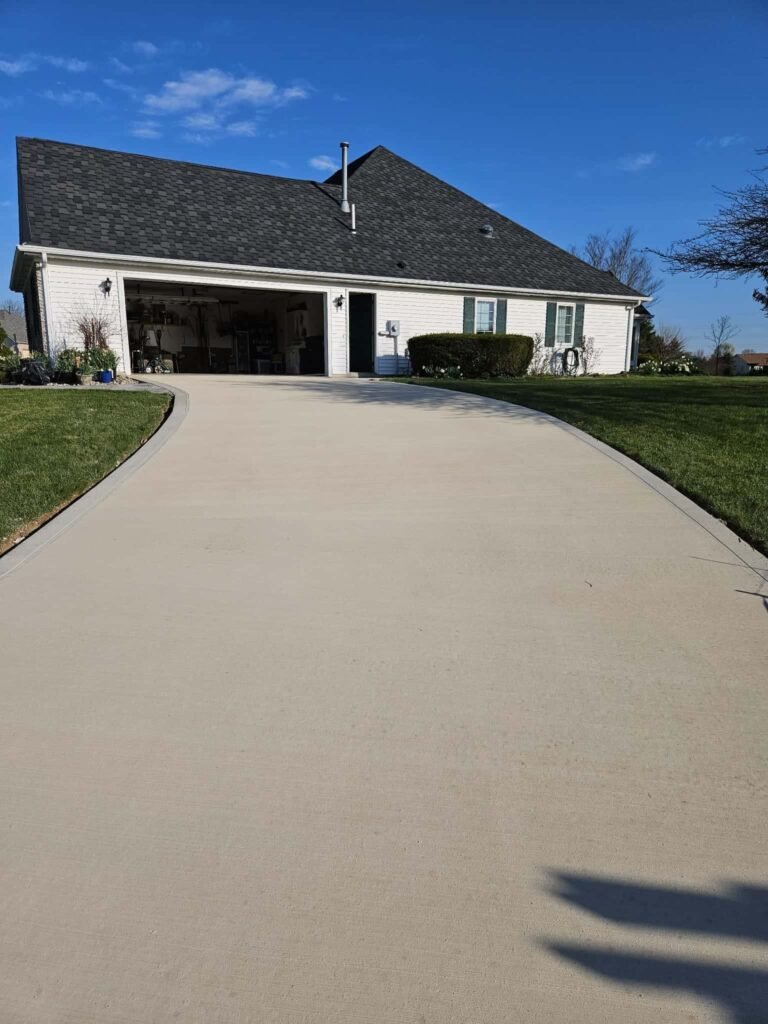
Driveways are the most exposed surface on most properties. They take road salt, vehicle loads, and full freeze-thaw cycling. They deserve the best window you can get. If you are weighing whether the current slab has enough life left to wait for spring, our guide on [how long a concrete driveway lasts] outlines the failure signals worth watching.
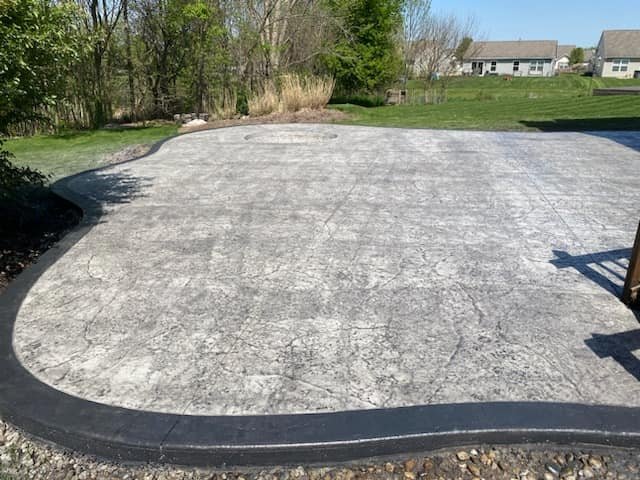
Patios sit under less load but the same weather. A shoulder-season pour is acceptable here more often than on a driveway, since a patio that develops a minor surface flaw is a cosmetic problem rather than a structural one. That said, concrete patio installation with a decorative finish deserves particular care. Which leads to the exception.
Stamped Concrete: Narrow Temperature Windows
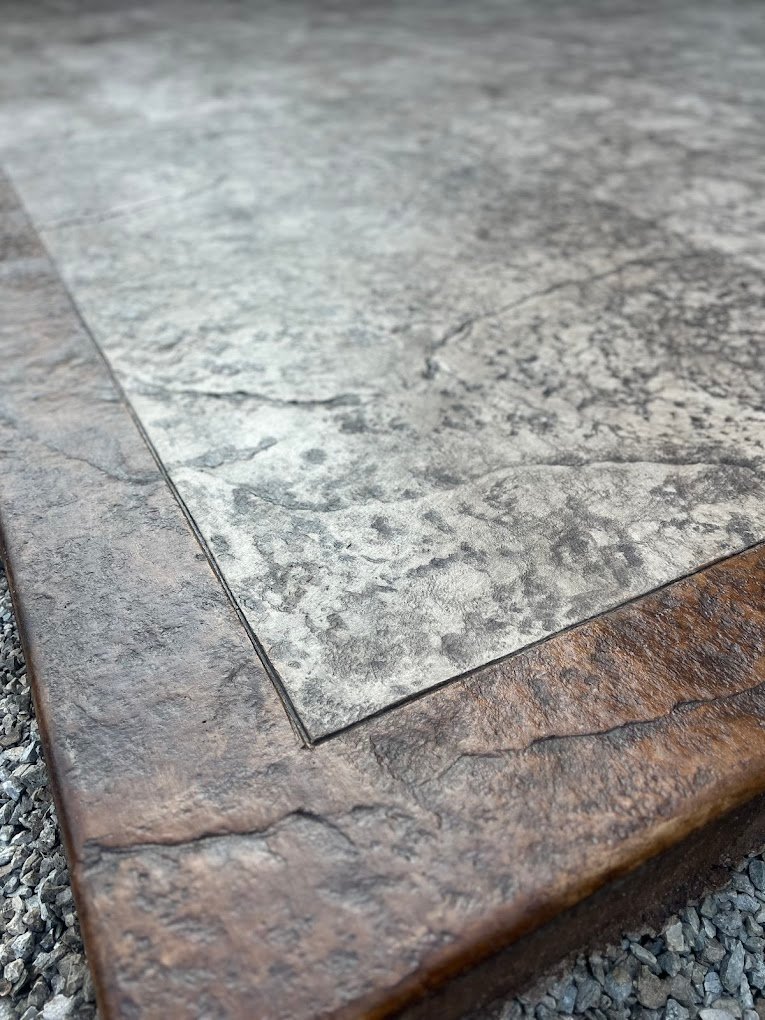
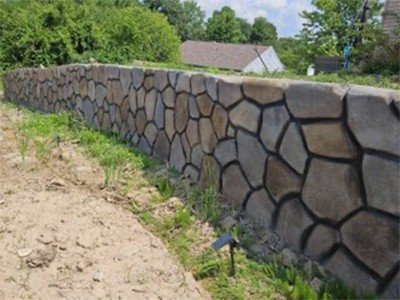
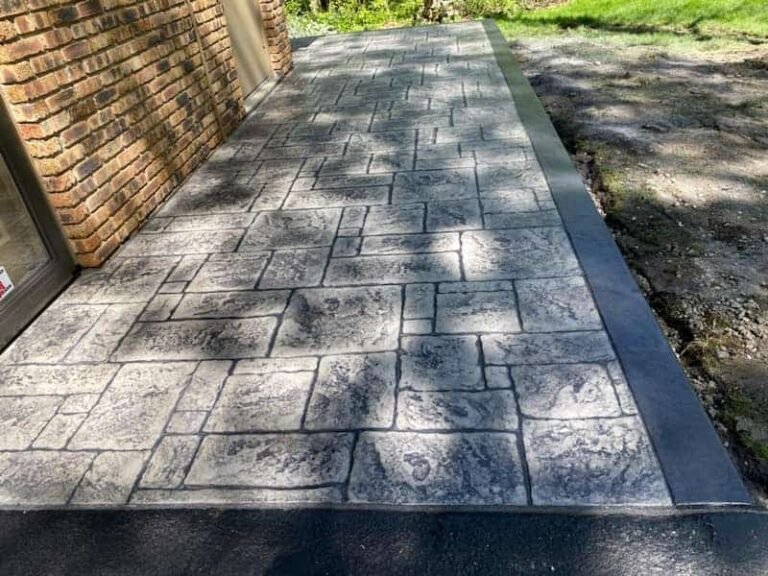
Stamped concreteis the one project type where the seasonal window narrows sharply. Stamping requires the slab to be in a specific plastic state, firm enough to hold detail but soft enough to receive it. That window may be 20 minutes wide. Heat closes it early. Cold never opens it fully. Release agents and integral colors behave unpredictably at temperature extremes. Restrict stamped work to May, September, and early October, and accept a delay rather than force a marginal day.
Interior Slabs & Garage Floors: Year-Round Viability
Interior slabs and garage floors are the most forgiving, since the placement environment can be enclosed and heated. Winter is genuinely viable for interior work.
Concrete Repair & Patching: Strict Temperature Maximums
Repair work follows a different logic entirely. Patching compounds and overlays have their own temperature specifications, often narrower than fresh concrete. Most concrete repair products require a substrate above 50 degrees and rising. A crack repaired in December frequently fails by March.
Common Timing Mistakes Indiana Homeowners Make
Trusting the daytime forecast alone. Overnight lows drive the freeze risk during the protection period. The number that matters is the low, not the high.
Assuming winter pours are always wrong. They are not. They are more expensive and require a contractor willing to do them properly. The wrong choice is a winter pour at summer pricing, which signals the protection steps are being skipped.
Rushing a spring pour before the ground has drained. Frost leaves the ground weeks before the subgrade stabilizes. Placing over saturated clay produces settlement cracking that timing alone cannot prevent.
Sealing too early. A sealer applied inside 30 days traps moisture underneath. The finish clouds over, and the sealer peels. Wait.
Believing that a wet-looking surface means a stronger slab. Excess water at the surface is the enemy of durability, not evidence of it.
Frequently Asked Questions
What is the best month to pour concrete in Indiana?
May, September, and early October are the strongest months for pouring concrete in Indiana. Daytime highs typically sit between 60 and 80 degrees, overnight lows stay comfortably above freezing, and humidity is moderate enough to slow surface evaporation without stalling the finishing window. June and August are workable but require earlier start times and closer attention to curing. April and late October are usable with monitoring and cold weather protection.
What if it rains 12 hours after pouring concrete?
Rain 12 hours after a pour is usually harmless. By that point the concrete has typically reached initial set and the surface is no longer vulnerable to being washed or diluted. Light rain at this stage can actually assist curing by keeping the surface moist. The real risk window is the first four to six hours, when standing water can thin out the surface and leave it powdery, flaky, or soft enough to wear away. If heavy rain is forecast within that early window, the pour should be delayed or the slab covered with plastic sheeting.
How late into the year can concrete be poured in Indiana?
In northeast Indiana, concrete can generally be poured through mid to late November, and sometimes into December, provided the contractor follows cold weather protocols. ACI 306 guidance calls for maintaining the concrete above 50 degrees Fahrenheit for the first several days after placement. That is achieved with heated mix water, additives that speed setting, insulated blankets, and in some cases ground thawing before the pour. The hard limit is not the calendar date but whether the subgrade is frozen and whether the slab can be kept warm through the protection period.
Can I walk on concrete 24 hours after the pour?
Light foot traffic is usually acceptable after 24 to 48 hours in normal Indiana conditions, though 48 hours is the safer default. Cool weather slows hydration and can push that window out. Avoid dragging furniture, setting ladders, or placing point loads on the slab during the first week. Vehicles should stay off a residential concrete driveway for at least seven days, and heavier vehicles such as delivery trucks or RVs should wait a full 28 days.
Can you pour concrete in winter in Indiana?
Yes, winter concrete pours are done in Indiana every year, but they require planning and added cost. The subgrade must be thawed and free of frost, the mix is often adjusted with an accelerator or a higher cement content, and the finished slab must be protected with insulated blankets or heated enclosures. Expect a 10 to 20 percent cost premium for the extra materials and labor. Contractors who skip these steps risk frozen concrete that never reaches design strength.
Does concrete cure faster in hot weather?
Concrete sets faster in hot weather, but setting and curing are not the same thing. High temperatures speed up the reaction, which shortens the finishing window and increases the chance of hairline cracking as surface moisture evaporates. Concrete that sets too quickly often ends up with lower long-term strength than the same mix placed at moderate temperature. In Indiana summers, contractors compensate with early morning pours, evaporation retarders, cool mix water, and immediate curing compound application.
Getting the Timing Right on Your Project
The best time to pour concrete in Indiana is a range, not a date. May and September give you the widest margin for error. April, June, August, and early October are all workable with attention. November through March demand cold weather protocols and a contractor who treats them as requirements rather than suggestions.
What none of that changes is the underlying truth: a well-executed November pour outperforms a careless July one. Timing buys you margin. Craftsmanship spends it well.
Crystal Creek Concrete has been placing concrete across Fort Wayne, Allen County, and northeast Indiana for over 17 years. We schedule around the weather, not against it, and we tell homeowners plainly when waiting six weeks will get them a better slab. If you are planning a driveway, patio, foundation, or repair this year, we will walk your site, review the conditions, and give you a straight estimate with a realistic pour window.
Call or text us at (260) 241-4936, or request a free estimate online. We will help you get the timing right the first time.