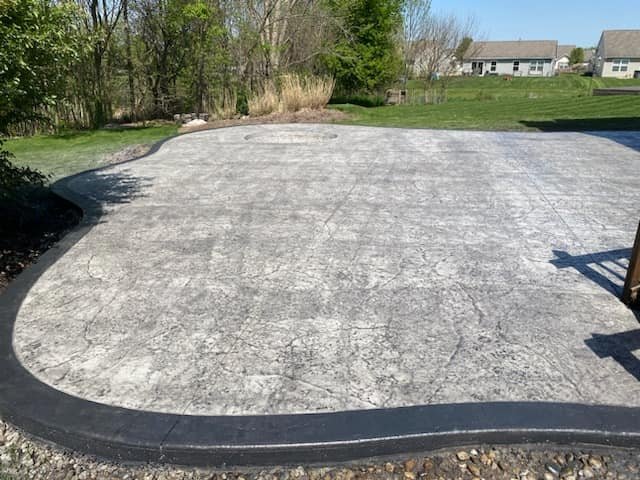
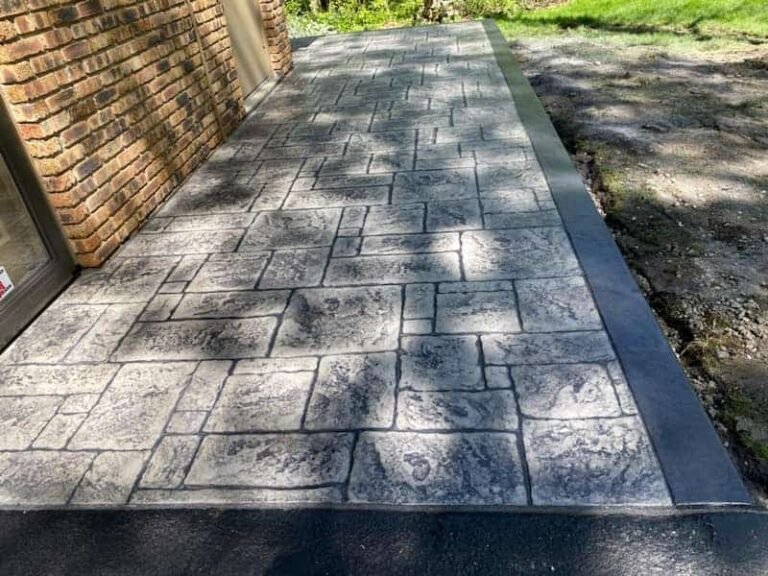
Choosing between stamped concrete vs pavers isn’t just a style decision; it’s a long-term durability and maintenance decision. Both can look high-end, both can boost curb appeal, and both can create a great patio or walkway. But they age differently. Stamped concrete is a single, continuous slab with a decorative finish, while pavers are individual units installed over a compacted base. That core difference affects everything: cracking risk, repairs, maintenance, and how each surface handles Fort Wayne’s freeze/thaw cycles.
This guide breaks down the basics, the real-world pros and cons, and the cost of stamped concrete vs pavers in a way that helps you choose confidently whether you’re deciding on a stamped concrete patio or pavers, comparing pavers or stamped concrete for a driveway, or considering decorative options like a brick stamped concrete patio.
The basics of Stamped Concrete
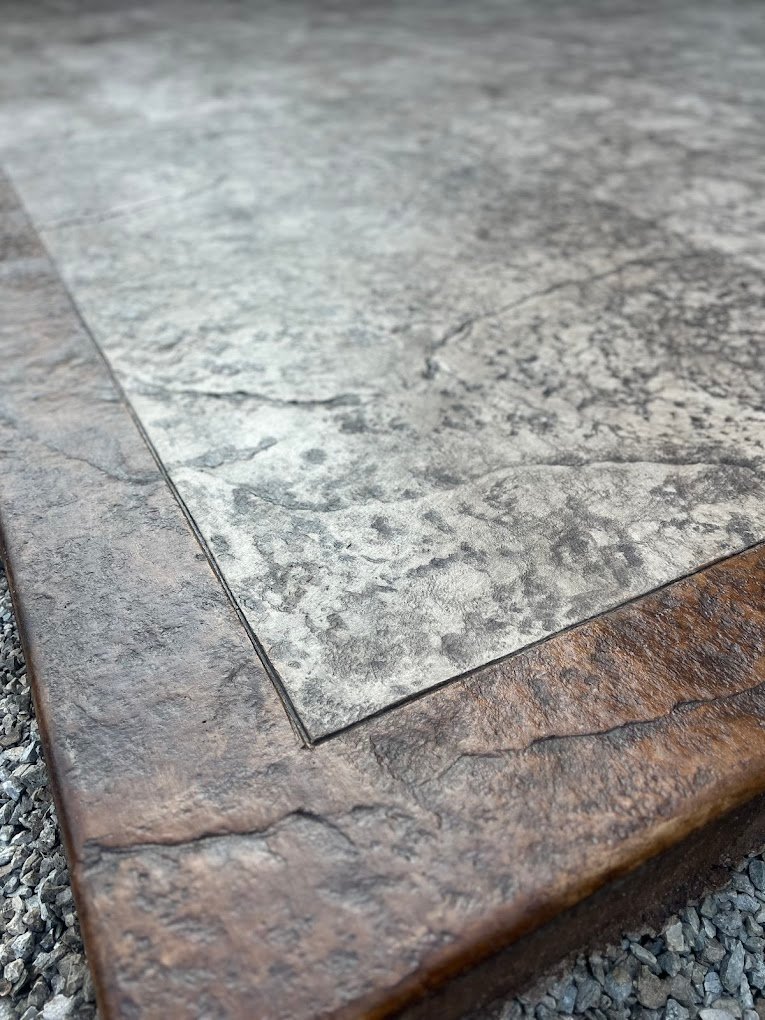
Stamped concrete is poured concrete that’s textured and colored to mimic materials like stone, slate, tile, or brick. You’ll also see it described as brick-stamped concrete patio finishes or patterns that resemble stamped pavers (sometimes people call this look concrete stamped pavers, even though it’s still one slab).
What stamped concrete is best known for
- A seamless, decorative look (often “stone” or “brick” style)
- Faster installation compared to laying individual pavers
- A wide range of patterns and colors
- A clean, continuous surface (no joints between pavers)
What to understand before choosing it
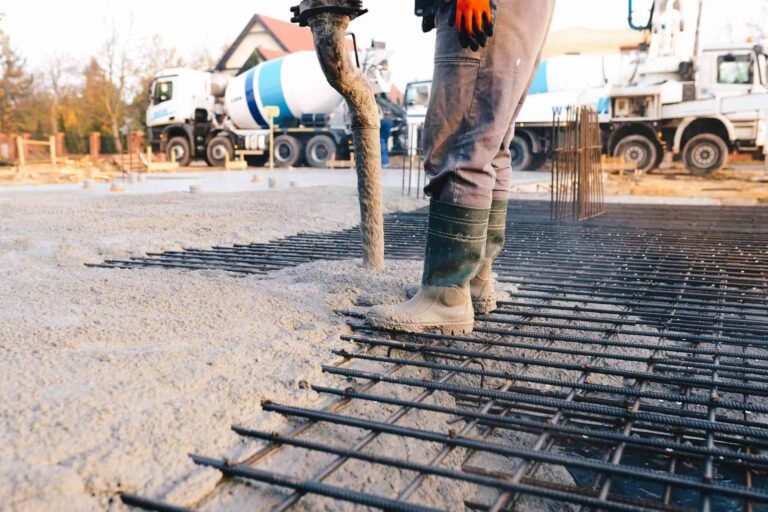
Stamped concrete can crack (all concrete can). The goal is to manage cracking with proper base prep, reinforcement when needed, control joints, and correct curing. Maintenance usually includes periodic cleaning and resealing to protect color and finish.
Fast fact: Most stamped concrete “wear” issues are sealer-related, not structural. Re-sealing at the right time makes a huge difference.
The Basics of Pavers
Pavers are individual bricks or stones (concrete pavers, clay brick, or natural stone) installed over a compacted base with sand and edge restraints. Because they’re modular, pavers can flex slightly with ground movement and are often chosen for reparability and long-term serviceability.
What pavers are best known for
- Strong durability with good resistance to cracking (because they’re not one slab)
- Easy spot repairs (replace a few pavers instead of redoing a whole surface)
- Great traction and a classic, upscale look
- Long lifespan when installed correctly
What to understand before choosing them
Pavers have joints. Those joints can allow weeds if not maintained, and the surface can settle if the base isn’t done properly. Maintenance often includes joint sand upkeep and occasional leveling in problem areas.
Fun fact: Many homeowners choose pavers specifically because “repairs don’t show”; you can fix one section without patch lines.
stamped concrete vs pavers
If you’re stuck on pavers or stamped concrete, start with how you want the surface to behave over time. Stamped concrete is one continuous surface, great for a clean look and easier sweeping, but it can crack, and repairs can be visible. Pavers are modular, great for reparability and movement tolerance, but they require joint maintenance and a well-built base to prevent settling.
Below is a practical comparison focused on what most homeowners care about: minimum cost, durability/cracking, maintenance, and repairs.
| Category | Stamped Concrete | Pavers |
| Minimum Cost | Often, a lower starting price for basic stamped designs | Often higher starting price due to labor + materials |
| Durability / Cracking | Durable slab, but cracking is possible (managed with joints/prep) | Very durable; less “cracking” risk, but can settle if the base is weak |
| Maintenance | Cleaning + periodic resealing to protect color/finish | Joint sand upkeep + weed control; occasional re-leveling |
| Repairs | Repairs can be noticeable (patches may not match perfectly) | Easy spot repairs (replace individual pavers) |
Cost note (what “minimum cost” really means)
When comparing the cost of stamped concrete vs pavers, the “minimum” is usually:
- Stamped concrete: simpler pattern + fewer colors + straightforward site prep
- Pavers: basic paver style + standard border + straightforward base
As designs get more complex (borders, curves, multiple colors, premium pavers), paver pricing can climb quickly. Stamped concrete pricing rises with more intricate stamping, coloring, and sealing systems.
Which one is right for you?
There isn’t one universal winner. The “right” choice depends on your priorities: budget, long-term maintenance preferences, repair expectations, and the look you want.
If you want the easiest-to-clean surface
Stamped concrete is usually the winner. It’s a continuous slab, so you don’t have joints collecting debris. If you like the look of stamped pavers but want simpler sweeping and a seamless feel, stamped concrete can be a great fit, just plan on resealing.
If you want the easiest repairs long-term
Pavers tend to win here. If a section settles or gets damaged, you can lift and reset or replace individual pavers. That’s a big reason people choose a stamped concrete patio or pavers debate in favor of pavers repairs are typically less visible.
If you’re prioritizing the lowest upfront cost
Stamped concrete often has a lower entry price than pavers for similar square footage, especially for simpler patterns. That said, the “fair price” depends heavily on prep, thickness, and finish quality.
If you want a premium, high-end look with design flexibility
Both can look premium. Pavers offer a natural, dimensional look. Stamped concrete offers pattern + color flexibility (including brick stamped concrete patio styles) and can mimic multiple materials without the cost of natural stone.
If you want the most predictable performance in freeze/thaw conditions
Both can perform well in Fort Wayne when installed correctly. The deciding factor is usually installation quality:
- Stamped concrete needs proper base prep, joints, and sealer maintenance
- Pavers need a properly compacted base, edge restraints, and joint sand maintenance
Fast fact: A great install beats a “better material” with a rushed base; most failures start underneath the surface.
Need to Choose Between Stamped Concrete and Pavers?
If you’re weighing stamped concrete vs pavers for a patio, walkway, or outdoor living space, call Crystal Creek Concrete in Fort Wayne, Indiana. As a professional concrete contractor, we’ll help you compare options based on your budget, style goals, and long-term maintenance preferences, then give you a clear recommendation and estimate you can feel confident about. Call us today for a free estimate!