Concrete is one of the most versatile materials you can use on a residential property. You can install it under a car, around a pool, along a garden border, or right at your front door. But the fact that it works in all of those places doesn’t mean every type of concrete surface works everywhere, and starting a project without thinking through which finish and application fits your specific situation is one of the most common reasons homeowners end up dissatisfied with results they can’t easily change.
This guide is for homeowners who know they want concrete but haven’t sorted out which option actually makes sense for their property, their budget, and how they plan to use the space.
Start With the Location, Not the Look
The most natural instinct when choosing a concrete surface is to start with aesthetics. You see a stamped patio you love, or a neighbor’s smooth broom-finish driveway that looks clean and simple, and you start from there. But the smarter starting point is the location itself, because different areas of your property have different functional demands that should shape the surface choice before style enters the conversation.
Fun Fact: Indiana’s freeze-thaw cycle, where temperatures repeatedly drop below freezing and rise above it throughout winter, is one of the most demanding conditions a concrete surface can face, which is why surface finish and sealing decisions that work well in warmer climates don’t always translate directly to Northeast Indiana properties.
A front driveway handles vehicle weight, road salt, snowplowing, and temperature extremes daily. A backyard patio mostly handles foot traffic, outdoor furniture, and occasional grilling. A pool deck has to stay slip-resistant when wet. Each of these scenarios points toward a different surface finish, and getting that match right is the foundation of a concrete project that actually delivers long-term.
Concrete Driveway Options: Function Leads the Decision
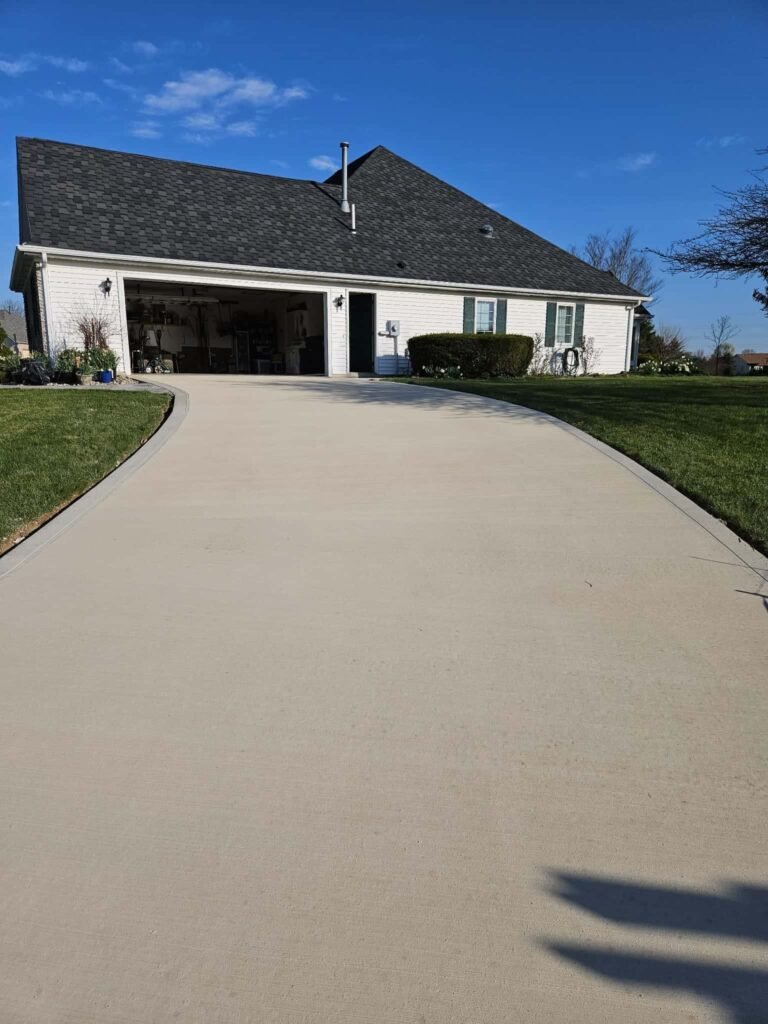
For driveways, the conversation starts with durability and traction rather than decorative finishes. This is the highest-traffic, highest-stress surface on most residential properties, and the finish has to hold up to vehicle weight, deicer chemicals, and Fort Wayne’s winters without becoming a maintenance burden.
A standard broom finish remains the workhorse choice for most residential driveways in the area. The texture it creates provides consistent traction even when wet or icy, repairs blend in relatively well, and the overall maintenance demands are low. For homeowners who want something that performs the same way with more visual interest, an exposed aggregate finish adds texture and subtle visual depth without sacrificing the grip or durability that a driveway demands.
Quick Fact: Decorative driveway finishes like polished or heavily sealed stamped concrete can become significantly slippery in wet or icy conditions, which is why traction, not appearance, should be the primary filter for driveway surface decisions in climates with real winters.
If you’re weighing whether a decorative finish is worth the additional cost and maintenance for your specific driveway, stamped vs regular concrete covers that comparison in full detail, including how each performs over time and what repairs look like down the road.
Concrete Patio Ideas: Where Decorative Options Make the Most Sense
The patio is where decorative concrete genuinely earns its place. Unlike a driveway, a patio sees only foot traffic, it’s a space people use to relax, entertain, and enjoy the yard, and the visual experience actually matters in a way it often doesn’t when you’re just parking a car.
| Surface Type | Best Patio Application | Key Consideration |
|---|---|---|
| Stamped concrete | Primary outdoor living areas, front entry | Needs consistent resealing, 2 to 4 years |
| Broom finish | Functional walkways, utility areas | Maximum traction, lower maintenance |
| Exposed aggregate | Transition areas, pool surrounds | Natural texture, slip-resistant |
| Colored concrete | Decorative borders, accent areas | Color may fade without sealing |
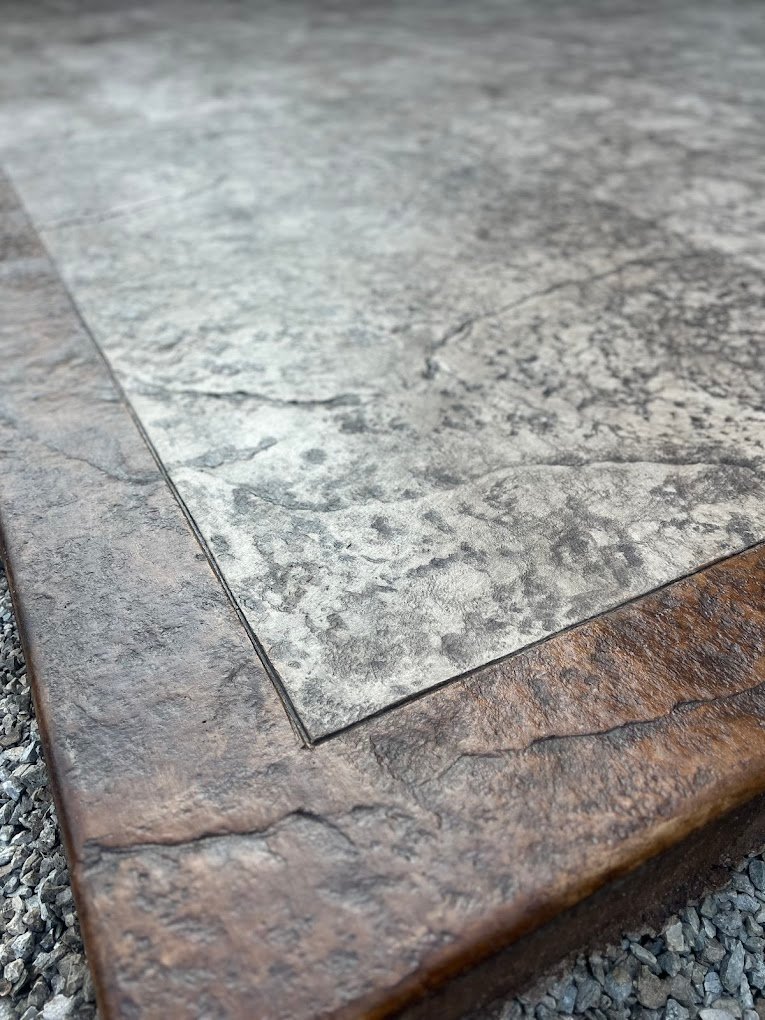
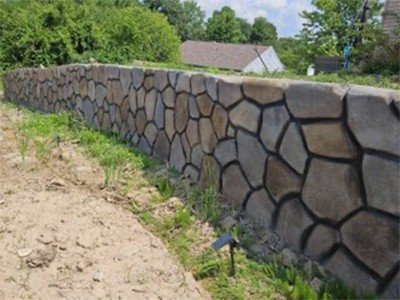
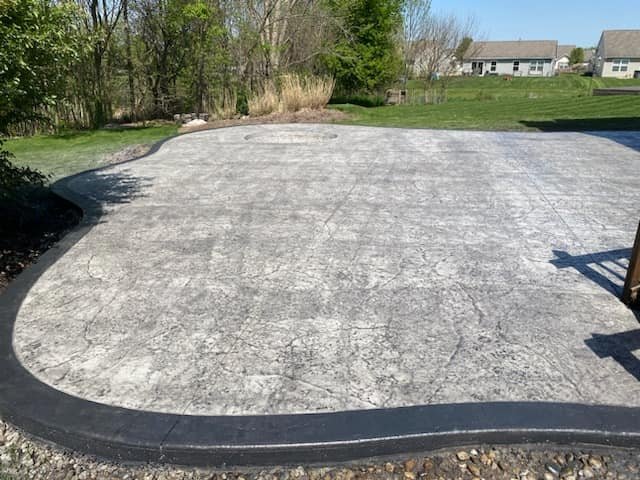
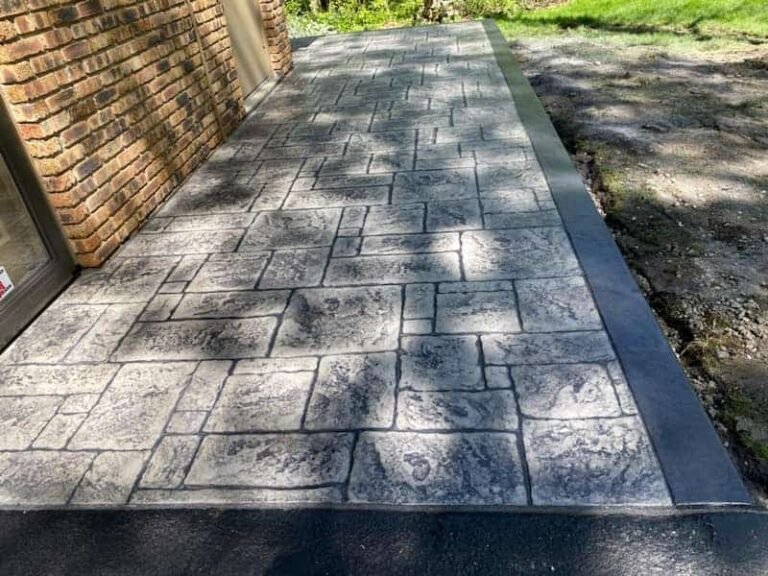
Stamped concrete patio options are particularly well-suited to outdoor living spaces where homeowners want the look of natural stone, brick, or tile at a lower installation cost than the real materials would require. The key trade-off is maintenance, stamped concrete needs more consistent sealing than a plain finish to keep its appearance intact, especially given Indiana’s weather.
What Stamped Concrete Actually Involves
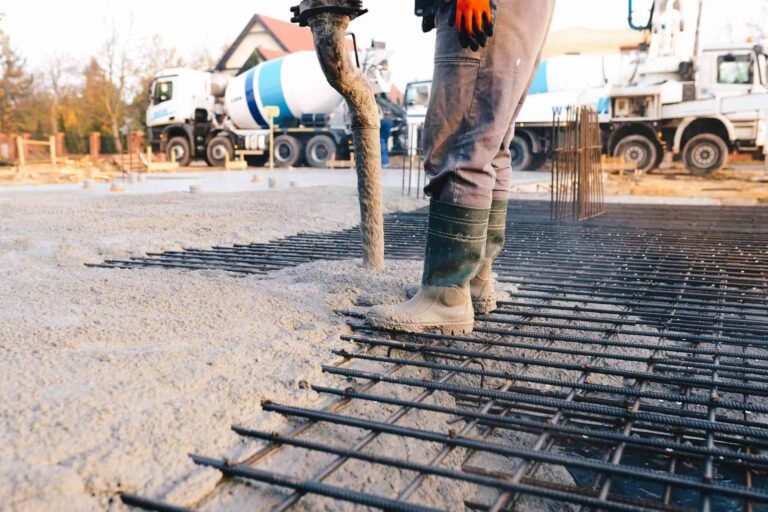
A lot of homeowners assume stamped concrete is just regular concrete with a pattern pressed into it at the end. In practice, the process is more involved than that, which is directly reflected in the cost difference and why contractor experience matters more for stamped work than for standard pours.
Fast Fact: Stamped concrete typically involves integral color mixed into the concrete itself, plus a release agent and stamping tools pressed in before the concrete fully sets, all of which requires precise timing since concrete cures quickly and the stamping window is narrow.
Color and pattern consistency depend heavily on the crew’s timing and technique, which is one of the reasons stamped concrete results can look dramatically different between contractors even when using the same pattern and color system.
Concrete Surfaces for Driveways and Patios: Matching to Your Property
For most Fort Wayne homeowners making this decision for the first time, a simple framework helps: let the use case lead, then bring aesthetics in within those bounds.
- Driveways that handle vehicles and winter conditions: broom finish or exposed aggregate as the baseline, decorative options only with explicit attention to traction
- Backyard patios and outdoor entertainment areas: stamped concrete or colored concrete offer the most visual return and make sense where maintenance can be managed
- Walkways and entry paths: either finish works well, though exposed aggregate is a good middle ground between visual interest and safety
- Pool decks: texture is non-negotiable, an anti-slip additive or naturally textured aggregate finish should be the starting point
How Indiana’s Climate Shapes the Decision
One factor that often gets underweighted in general concrete guides is regional climate, and it matters a lot for surface selection in Northeast Indiana. The freeze-thaw cycle doesn’t just affect how concrete is poured and cured, it affects how different finishes hold up over years of winters.
Heavily sealed or polished surfaces that look beautiful in warmer climates can become liability concerns in Fort Wayne winters. Salt and de-icer chemicals degrade sealers faster than most homeowners expect, which means a decorative surface that starts out stunning can require more maintenance than originally planned within just a few seasons if sealing isn’t kept up.
Get the Right Surface for Your Property With Crystal Creek Concrete
Choosing the right concrete surface isn’t complicated once you know the questions to ask, but it’s much easier to get right at the planning stage than to correct after installation. Crystal Creek Concrete has been helping Fort Wayne homeowners make these decisions for over 17 years, bringing local knowledge of Indiana’s soil, climate, and building conditions to every project. Whether you’re planning a driveway replacement, a new concrete patio, or a stamped concrete upgrade for your outdoor living space, our team can walk you through which surface makes sense for your specific property before any work begins. Contact Crystal Creek Concrete today for a free estimate and a conversation about which concrete surface is actually right for you.